Researchers and students at the University of Leicester are developing new technology to enable quadruple amputee and TB rookie Harvey Phillips, to pursue his dream of becoming a racing driver.
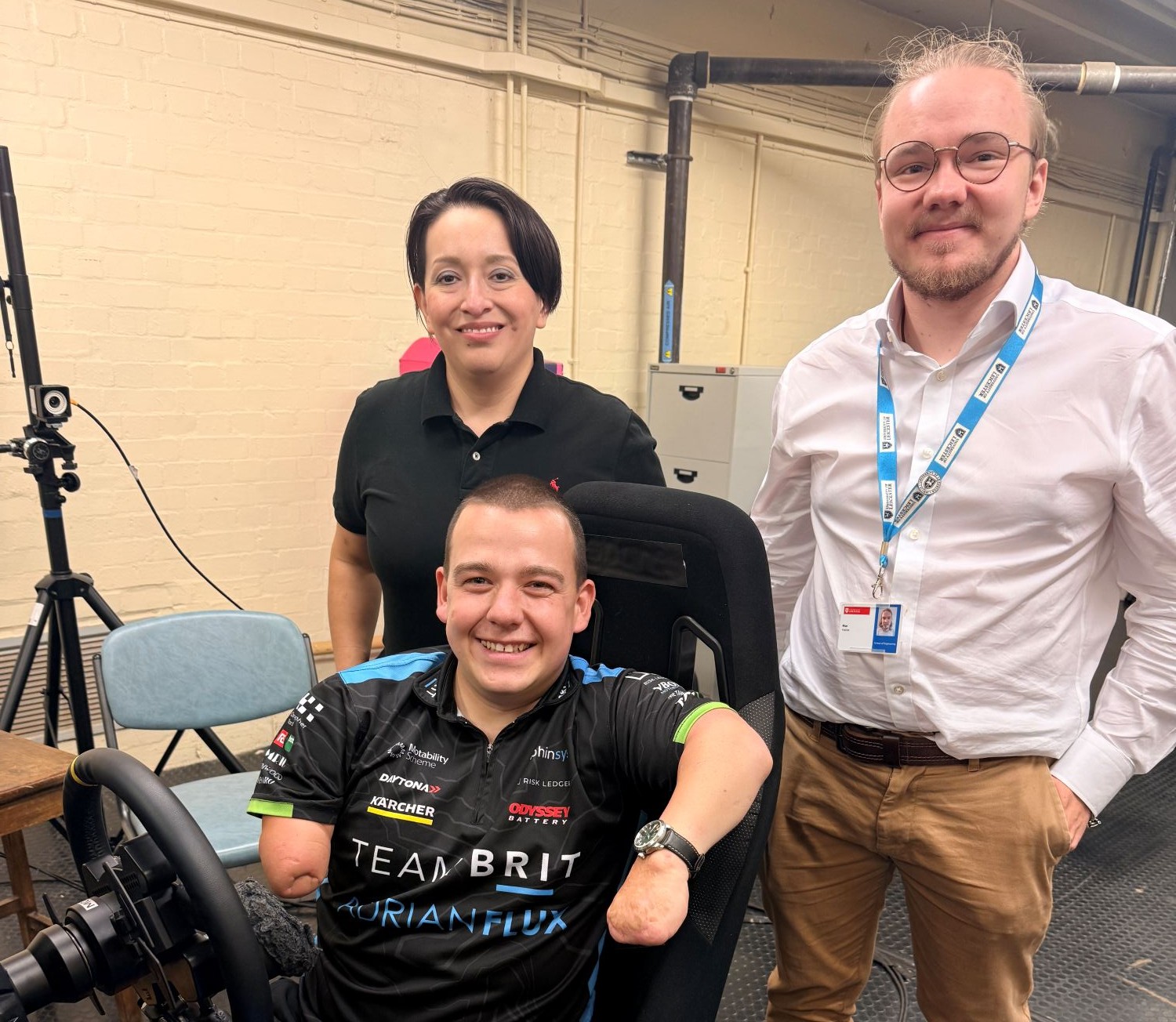
Dr Manuela Trejo, an expert in prosthetic design and Dr Seth O’Neill, a senior lecturer and musculoskeletal physiotherapist are leading the project with engineering students, which will support Harvey Phillips in his journey to joining us on track next year.
21-year-old Harvey joined the team earlier this year to begin a developmental programme to prepare him for racing. Harvey had parts of his arms and legs amputated after contracting meningitis as a baby, and has gone on to excel in para-sports, becoming a British para-swimming champion.
He is able to drive his road car, provided through the Motability Scheme, thanks to adaptive technology which enables him to steer with his right arm and control the throttle, brake and gears with his left.
Thanks to funding from UKRI’s EMERGE RehabTech Impact Acceleration Fund, the team at the university have created a version of this technology suitable for Harvey to use in a racing simulator, to support his training for the track.
The first prototypes were presented to Harvey and Team BRIT Principal Mike Scudamore in March before being further refined and tested. In August, Harvey tested the controls with researchers capturing data on his muscle reactions whilst using different versions of the technology.
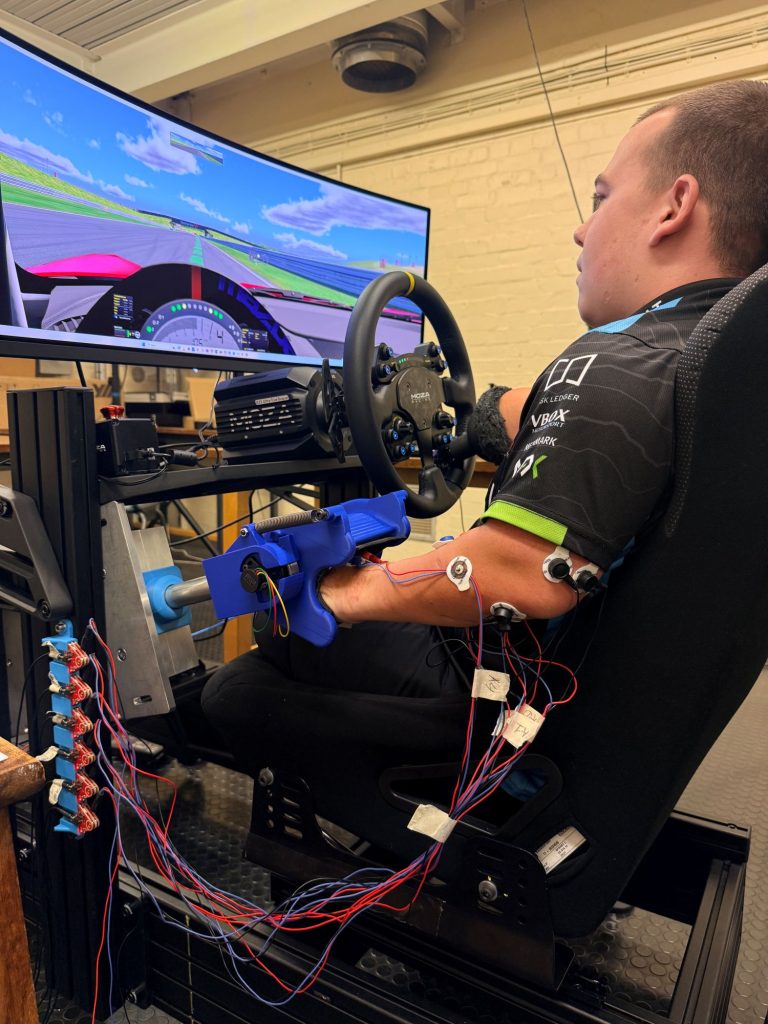
Harvey has since had his first test day at Donington Park circuit using similar technology in real life on the track.
Dr Trejo explains, “It’s a real privilege to be working with Harvey on this project. He is able to act as a co-designer, offering continuous feedback on prototype designs, making sure that anything we create is user-centred and effective.
“We hope that our solutions will open doors for Harvey, enabling him to race competitively in mainstream motorsport, and provide the evidence base for real solutions which will mean that people with disabilities like Harvey’s can regain driving independence in competitive sports and other areas of life.”
Harvey Phillips said: “I’m really pleased to be working with the university on this project. The adaptations I have in my road car are critical for me, and mean that I live an entirely independent life. To be able to have the same level of independence in motorsport is amazing. Now that my swimming career has finished, I want to focus my efforts on racing with Team BRIT, so having the technology to enable this will be incredible.”
Dr Trejo and her team will now analyse the latest test data to further refine the prototypes for Harvey’s use.